Exponential Wealth, Double the Trouble
TikTok post by Nana Yaw Asiedu (@rasaboga)

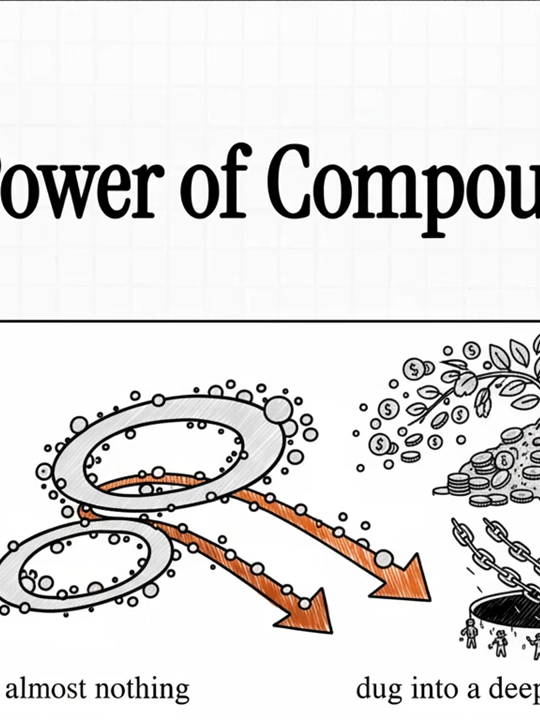
The_Power_of_Compounding- Nana Yaw Asiedu At its core, compound interest is the process where the interest earned on an investment is reinvested, so that in the next period, interest is earned on both the original principal and the accumulated interest from previous periods. In technical terms, it represents exponential growth rather than the linear growth seen in simple interest. Key Technical Drivers Three variables dictate the "velocity" of compounding: Compounding Frequency (n): The more frequently interest is calculated (daily vs. annually), the faster the balance grows. This is because the interest is added back to the base more often, increasing the amount on which the next interest payment is calculated. Time (t): Because the growth is exponential, the most significant gains occur toward the end of the investment horizon. The Interest Rate (r): Even small increases in the rate can lead to massive differences in the final sum over long periods due to the "multiplier effect" of reinvestment. The "Rule of 72" A quick technical shortcut to estimate how long it takes for an investment to double at a fixed interest rate is the Rule of 72. You simply divide 72 by the annual interest rate: Years to Double≈Interest 72/Rate Example: At a 12% annual return, your money doubles approximately every 6 years (72/12). Perspective: The Double-Edged Sword While compounding is a powerful tool for wealth creation in savings and investments (like T-bills or equity funds), it acts with the same mathematical efficiency in debt. High-interest debt, such as credit cards or certain micro-loans, can spiral quickly because the interest owed is added to the balance, leading to "interest on interest" that the borrower must pay.